Eye Makeup for Different Eye Shapes: A Complete Guide

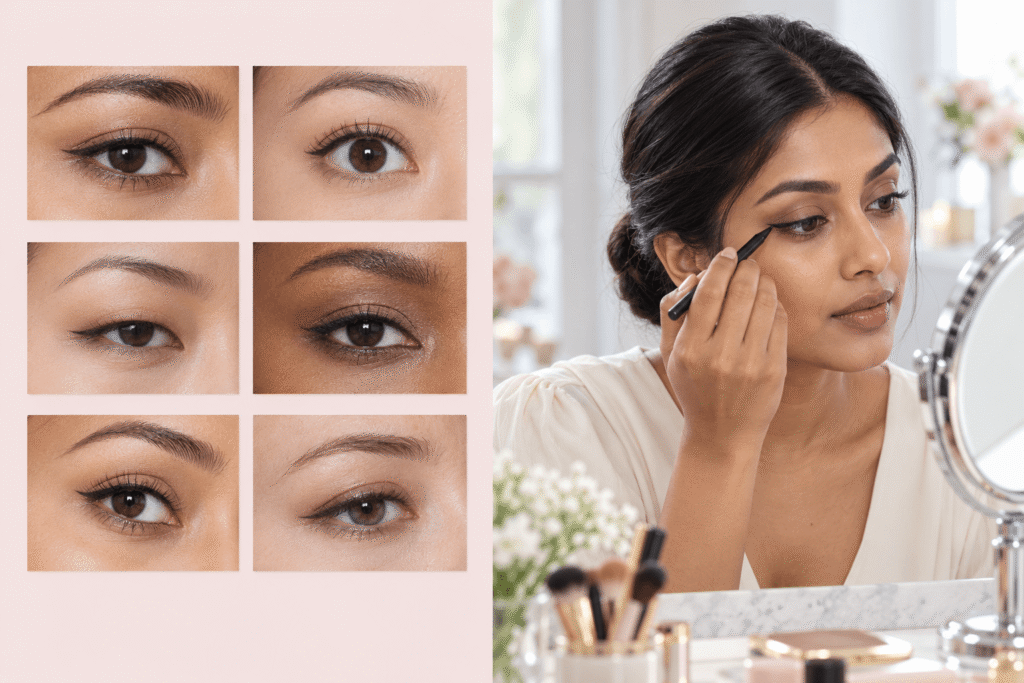
Your eyes are often the focal point of your makeup look, but one size does not fit all when it comes to application techniques. Understanding eye makeup for different eye shapes is the key to enhancing your natural features rather than fighting against them. Whether you have hooded lids, deep-set sockets, or monolids, the right techniques can open up your gaze, define your shape, and create a balanced, polished appearance. This guide breaks down how to identify your eye shape and provides tailored tips for makeup for different eye shapes, ensuring you feel confident and radiant every time you pick up a brush.
Eye Makeup for Different Eye Shapes

What Is Your Eye Shape?

Eye shape is determined by the structure of your eyelid, the visibility of your crease, and the angle of your eye’s outer corner. While everyone’s eyes are unique, most fall into specific categories that respond best to particular makeup strategies. Knowing your shape helps you choose the right eye makeup according to eye shape, allowing you to work with your natural anatomy instead of trying to change it.

How to Determine Your Eye Shape?

Before diving into products, take a moment to identify your eye shape. Stand in front of a mirror with a neutral expression and look straight ahead. Do not raise your eyebrows.

  • Almond Eyes: You see a visible crease, and the outer corners lift slightly upward. The iris usually touches both the top and bottom eyelids.
  • Hooded Eyes: A fold of skin from the brow bone droops over the crease, hiding most or all of your mobile lid when your eyes are open.
  • Monolid Eyes: You have a smooth eyelid with no visible crease. The skin flows directly from the brow bone to the lash line.
  • Round Eyes: Your eyes appear wide and open, often with visible white space above or below the iris. The height of the eye is prominent.
  • Downturned Eyes: The outer corners of your eyes dip slightly downward toward your cheekbones.
  • Upturned Eyes: The outer corners lift higher than the inner corners, giving a cat-eye effect naturally.
  • Deep-Set Eyes: Your brow bone is prominent, and your eyes sit deeper in the socket, often creating a shadowed crease.
  • Close-Set Eyes: The distance between your inner corners is less than the width of one eye.
  • Wide-Set Eyes: The distance between your inner corners is greater than the width of one eye.
  • Small Eyes: The overall eye area appears smaller in proportion to the face, often with less visible lid space.
  • Prominent Eyes: The eyes appear to bulge slightly forward, with the lid often appearing more exposed.

Eye Makeup for Almond Eyes

Almond eyes are considered the most versatile shape, as almost any style works well. The goal is to maintain their natural balance and symmetry.

  • Eyeshadow: Blend shadow outward and upward from the crease to accentuate the natural lift. A classic cut-crease or smokey eye looks stunning.
  • Eyeliner: Add a soft wing liner pointing toward the end of your eyebrow to elongate the eye further. Tightlining the upper lash line adds definition without overpowering the shape.
  • Mascara: Apply evenly to top and bottom lashes to keep the eye open and balanced.

Eye Makeup for Round Eyes

Round eyes are naturally wide and open. The objective is to create the illusion of length and add depth to the outer corners.

  • Eyeshadow: Elongate the eye by focusing darker shadow on the outer corners and blending it horizontally toward your temples rather than rounding it out. Avoid placing shimmer directly in the center of the lid, which can make eyes look wider.
  • Eyeliner: Extend your liner slightly past the outer corner in a straight line or slight wing. Avoid thick lines in the center of the lid.
  • Mascara: Focus volume on the outer lashes to draw the eye outward.

Eye Makeup for Hooded Eyes

Hooded eyes have a fold of skin that covers the mobile lid. The challenge is ensuring your makeup remains visible when your eyes are open.

  • Eyeshadow: Apply eyeshadow slightly above your natural crease so the color remains visible when your eyes are open. Use matte shades in the crease to create depth and avoid shimmer on the hood, which can emphasize heaviness.
  • Eyeliner: Keep eyeliner thin and tightline your upper lash line. Thick liner can disappear into the fold or make the lid look heavier. A subtle wing can help lift the eye.
  • Mascara: Curling your lashes is crucial to open up the eye and prevent them from hitting the hood.

Eye Makeup for Deep-Set Eyes

Deep-set eyes sit further back in the socket, often with a prominent brow bone. The goal is to bring the eyes forward and brighten the area.

  • Eyeshadow: Use lighter, shimmery shades on the lid to reflect light and bring the eyes forward. Define the crease with a soft, medium-toned matte shade, but keep it higher than the natural crease to avoid looking heavy.
  • Eyeliner: Thin, brown or gray liner works better than harsh black. Tightlining adds definition without closing off the eye.
  • Mascara: Focus on lengthening the lashes to open up the eye. Avoid heavy lower lash mascara, which can make the eyes look smaller.

Eye Makeup for Monolid Eyes

Monolids lack a visible crease, providing a smooth canvas. The goal is to create dimension and definition.

  • Eyeshadow: Build a gradient effect with darker shades close to the lash line, fading lighter toward the brow. This creates the illusion of depth. Matte transitions shades work well to soften the look.
  • Eyeliner: Create a bold, thick winged liner that stays visible when the eye is relaxed. Gel or liquid liners often hold up better on monolids, which can be prone to transferring.
  • Mascara: Volumizing mascara helps balance the bold liner and adds definition to the lash line.

Eye Makeup for Upturned Eyes

Upturned eyes have a natural lift at the outer corners. The goal is to balance the lift and soften the angle.

  • Eyeshadow: Focus depth in the outer V but blend it slightly downward to counteract the natural lift. Smokey eyes look particularly flattering.
  • Eyeliner: Follow the natural curve of your lower lash line for the wing. Avoid extending the wing too high, which can exaggerate the upturn.
  • Mascara: Apply evenly, or focus slightly more on the inner lashes to balance the outer lift.

Eye Makeup for Downturned Eyes

Downturned eyes have outer corners that dip slightly. The goal is to create a lifting effect.

  • Eyeshadow: Lift the gaze by sweeping eyeshadow upward and outward at a 45-degree angle from the outer corner. Keep the inner corner bright and highlighted.
  • Eyeliner: Skip heavy liner on the outer lower lash line, as this can drag the eye down. Instead, use a thin line on the upper lid and wing it upward.
  • Mascara: Focus on the upper outer lashes to create a lifted effect. Curling lashes is essential for opening up the eye.

Eye Makeup for Close-Set Eyes

Close-set eyes have less space between them. The goal is to create the illusion of width.

  • Eyeshadow: Place lighter, shimmery shades on the inner corners and bridge of the nose to visually push the eyes apart. Darker shades should be concentrated on the outer corners.
  • Eyeliner: Start your liner from the middle of the upper lash line rather than the inner corner. This opens up the inner eye.
  • Mascara: Focus volume on the outer lashes to draw attention outward.

Eye Makeup for Wide-Set Eyes

Wide-set eyes have more space between them. The goal is to bring the focus inward.

  • Eyeshadow: Apply darker or deeper shades closer to the inner corners to visually bring the eyes together. Highlight the outer corners less intensely.
  • Eyeliner: Line the entire upper lash line, starting from the very inner corner. You can also tightline the lower inner lash line.
  • Mascara: Focus on the inner lashes to draw attention to the center of the face.

Eye Makeup for Small Eyes

Small eyes can be enhanced to appear larger and more awake. The goal is to maximize light and space.

  • Eyeshadow: Use light, neutral, or shimmery shades on the lid to reflect light. Avoid dark, heavy smokey eyes that can overwhelm the eye.
  • Eyeliner: Use a thin line or tightline. White or nude pencil on the waterline can make the eyes appear larger.
  • Mascara: Curl lashes thoroughly and apply a lengthening mascara. Avoid heavy lower lash mascara, which can close off the eye.

Eye Makeup for Prominent Eyes

Prominent eyes protrude slightly. The goal is to recede the lid slightly and add definition without emphasizing the bulge.

  • Eyeshadow: Use matte, medium-to-dark shades in the crease and outer corner to create depth and recede the lid. Avoid excessive shimmer on the center of the lid.
  • Eyeliner: A moderate wing can balance the prominence. Avoid extremely thick liner that may look heavy.
  • Mascara: Balanced application on top and bottom lashes helps frame the eye naturally.

How to Choose Eyeshadow and Eyeliner for Your Eye Shape

Choosing the right products enhances your technique. Here is a quick reference for eyeliner for different eye shapes and eyeshadow finishes.

Eye ShapeBest Eyeliner StyleBest Eyeshadow Finish
AlmondSoft WingVersatile (Matte/Shimmer)
RoundExtended WingMatte Outer Corner
HoodedThin/TightlineMatte Crease
Deep-SetThin Brown/GrayShimmer Lid/Matte Crease
MonolidBold WingMatte Gradient
DownturnedUpward WingMatte Outer Lift
Close-SetOuter Half LinerLight Inner Corner
Wide-SetFull Inner LinerDarker Inner Corner
SmallTightline/Nude WaterlineLight/Shimmer Lid
ProminentModerate WingMatte Crease/Outer V

Common Eye Makeup Mistakes for Different Eye Shapes

  • Ignoring Your Shape: Using trends that don’t suit your anatomy (e.g., heavy cut-creases on hooded eyes) can look messy.
  • Skipping Primer: Primer ensures longevity and prevents creasing, especially for hooded and monolid eyes.
  • Heavy Lower Lash Line: This can close off the eye, particularly for round, deep-set, or downturned shapes.
  • Wrong Shade Placement: Placing dark colors in the wrong area (e.g., center of round eyes) can distort your shape.
  • Neglecting Blending: Harsh lines can look unpolished. Always blend edges for a seamless finish.

Enhance Your Natural Features With the Right Eye Makeup

Mastering eye makeup for different eye shapes is about understanding your unique features and working with them. By identifying your shape and applying these tailored techniques, you can enhance your natural beauty and create looks that are both flattering and expressive. Remember, practice makes perfect, so don’t be afraid to experiment to find what makes you feel most confident.

If you are looking for personalized guidance on eye makeup for different eye shapes, professional artists can help you discover the best techniques for your unique features. For brides and beauty enthusiasts in Navi Mumbai, Aarti Gaikwad Makeup Artist offers expert advice and application services tailored to your individual eye shape and style preferences. Contact Aarti Gaikwad Makeup Artist today to learn how to bring out the best in your eyes with professional, customized care.

FAQs About Eye Makeup for Different Eye Shapes

How do I know what my eye shape is?
You can identify your eye shape by looking at the crease, the visible eyelid space, the position of your outer corners and the overall shape of your eyes. Common eye shapes include almond, round, hooded, monolid, deep-set, upturned and downturned eyes.

What is the best eye makeup for almond-shaped eyes?
Almond-shaped eyes suit a wide range of eye makeup styles. Winged eyeliner, soft smoky eyes and defined outer corners can enhance their naturally balanced shape.

How should I apply eye makeup for hooded eyes?
For hooded eyes, apply transition and crease shades slightly above the natural crease so they remain visible when the eyes are open. Keeping darker shades toward the outer corner can also help create definition.

What eye makeup looks best on round eyes?
For round eyes, extending eyeliner slightly outward and concentrating darker eyeshadow toward the outer corners can create a more elongated appearance. Soft winged looks can also complement the shape.

How can I do eye makeup for deep-set eyes?
Use lighter or medium eyeshadow shades on the mobile eyelid and avoid placing very dark shades too heavily in the natural crease. Soft blending can add definition without making the eyes appear deeper.

What is the best eyeliner style for different eye shapes?
The ideal eyeliner style depends on your eye shape. Winged liner can elongate round eyes, a lifted outer wing can complement downturned eyes, while thinner liner can help preserve eyelid space on hooded or monolid eyes.

How can I make my eyes look bigger with makeup?
Use light eyeshadow on the eyelid or inner corner, curl your lashes and apply mascara to the upper lashes. A softly defined outer corner and a subtle nude or neutral liner along the lower waterline can also make the eyes appear more open.

Can the same eye makeup technique work for every eye shape?
Not always. Eye makeup techniques should be adjusted according to the natural shape, crease and eyelid space. Small changes in eyeshadow placement, eyeliner and lash emphasis can make a makeup look more flattering for each eye shape.