
Excess shine, fading foundation, and makeup that separates after a few hours are common concerns for people with oily skin. If you want makeup for oily skin that lasts longer, the key is to prepare your skin properly, choose compatible products, and apply them in thin layers. A lightweight moisturizer, mattifying primer, and carefully applied setting powder can help reduce shine and improve makeup wear. In this guide, you will learn how to apply makeup for oily skin, prevent a cakey finish, and touch up your makeup throughout the day.
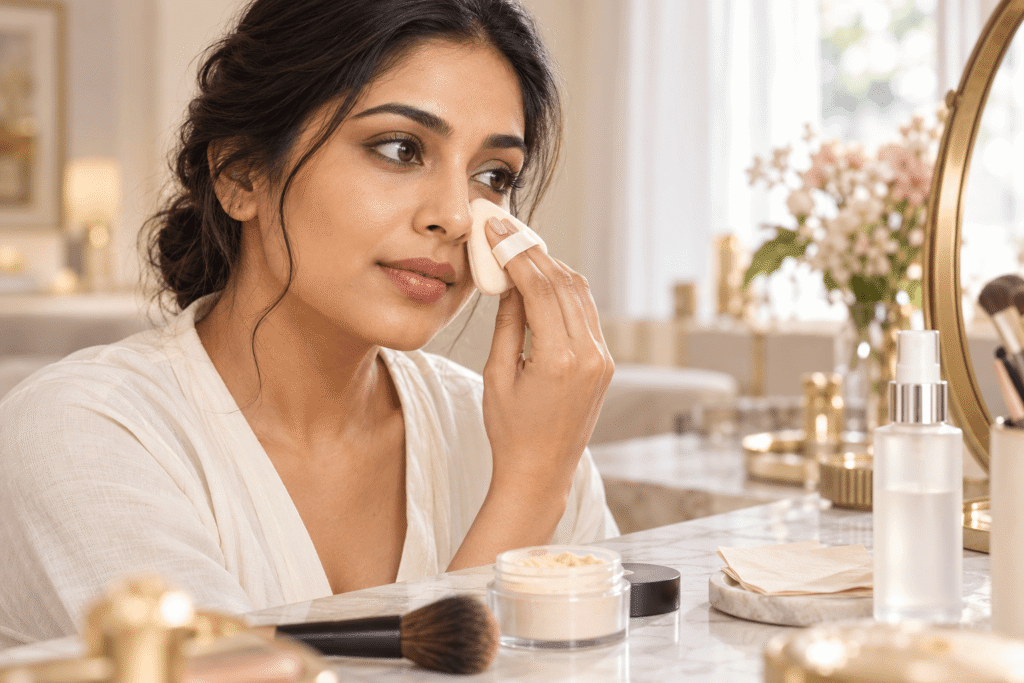
The foundation of long-lasting makeup is a well-prepped base. For oily skin, this means balancing hydration while managing excess oil. Many people make the mistake of skipping moisturizer, thinking it will reduce shine. However, skipping moisturizer can leave skin feeling dry or tight and may make makeup sit unevenly. A lightweight moisturizer can help maintain skin hydration, creating a smoother canvas for application.
Once your skin is prepped, the next crucial step is creating a barrier between your natural oils and your makeup. This is where primer and application technique play a vital role.
Setting your makeup is important for oily skin. The goal is to absorb excess oil and lock your base in place to prevent movement and shine.
Even the best-prepped skin may produce some oil throughout the day. The key to maintaining your look is knowing how to touch up without adding layers of product that can look cakey.
Long-lasting makeup starts with the right preparation, compatible products, and careful application. Use a lightweight moisturizer, apply foundation in thin layers, set oily areas strategically, and blot excess shine before touching up. Adjust your routine to your skin’s needs instead of relying on heavy layers of powder.
Want to improve your makeup application or learn techniques for different skin types? Aarti Gaikwad Makeup Artist offers professional makeup services in Panvel and Navi Mumbai, along with makeup education for aspiring artists. Get in touch to explore makeup services or learn more about professional makeup training.
What is the best foundation for oily skin?
Look for foundations labeled “matte,” “long-wear,” or “oil-free.” Ingredients like silica and kaolin clay help control shine. Liquid foundations with a natural matte finish often work best.
How often should I touch up my makeup?
Touch up only when necessary, typically once or twice during the day. Over-touching can lead to product buildup. Always blot oil before reapplying powder.
Can I wear dewy products if I have oily skin?
It’s best to avoid dewy or luminous products on high-shine areas like the T-zone. If you want a glow, apply subtle highlighter only to the high points of your cheeks, avoiding the nose and forehead.
Is baking necessary for oily skin?
Baking can be helpful for extremely oily areas, but it is optional. A good dusting of loose powder often suffices and is less likely to emphasize texture.
Why does my makeup separate after a few hours?
Separation usually happens when oil breaks down the makeup. Ensure you are prepping with oil-control skincare, using a mattifying primer, and setting thoroughly. Blotting during the day also prevents oil from breaking through.
Can I wear makeup without primer if I have oily skin?
Yes. Primer is optional. A suitable moisturizer, compatible foundation, and setting powder may be enough to achieve good wear. Use a primer if it improves your preferred finish or helps your makeup last longer.
Should I use loose or pressed powder for oily skin?
Loose powder is useful for setting makeup at home, while pressed powder is convenient for touch-ups. Choose a formula that suits your skin and apply it sparingly to avoid a heavy finish.
How do I stop my nose from getting oily after applying makeup?
Blot excess oil gently with blotting paper before applying a small amount of powder. Avoid repeatedly layering powder over oily skin, as this can make your makeup look uneven.
Elevating natural beauty through 15+ years of master bridal artistry and elite professional education in Panvel, Navi Mumbai.
Project Managed & SEO by DigiTeach | Website Managed by Web Creators India